Learning scientist · Author · Speaker
Knowing about something is not learning it.
For twenty years I've watched good teachers pack courses full of facts and call it learning. But learning isn't what you were shown — it's what you can do afterwards. This is the science of how that really works, and what it changes.
Try this — 15 seconds
Bloom's two-sigma problem
In a conventional class, achievement spreads wide — a few race ahead, most sit in the middle, some fall behind. This is the curve teaching has always accepted.
With one-to-one tutoring the whole distribution shifts right by about two standard deviations. The average tutored student now outperforms 98% of the conventional class. The unsolved challenge is delivering that at scale.
Distribution of achievement across one class. Source: Bloom, 1984.
Bloom's taxonomy — play with it
Where does your teaching park people?
Passive delivery — watching, listening, re-reading — mostly parks people at the bottom two tiers. They can remember and understand, but the interesting thinking never switches on.
Active learning lights the whole taxonomy. When people analyse, evaluate and create, curiosity and real engagement follow — and that is where learning sticks.
Each tier asks the brain to do a different kind of work. Higher up the pyramid, the harder — and the more engaging.
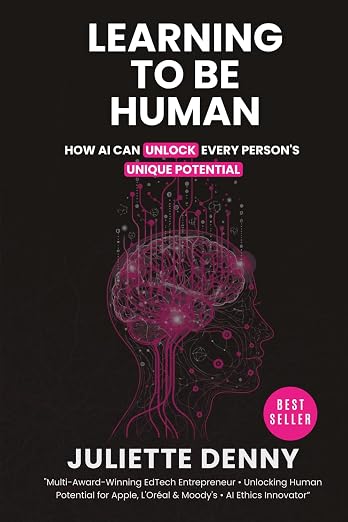
Learning to be human
When the machine can recall anything, the human job is to think — boldly, critically, and to create.
AI is brilliant at the easy stuff — remembering facts, looking things up, writing summaries. So teaching that stops there is training people for the jobs a machine already does better. What matters now sits higher up: good judgement, fresh ideas, and asking the question nobody else has thought of.
So the goal changes. Not to fill people with facts they could just look up, but to make them more curious, braver thinkers and more creative than the tools around them. That's what it means to learn to be human — and it's what the book is about.
Read the book →Founder & entrepreneur
I don't just study learning technology. I build it.
Two companies, both built on one belief: learning works when it's personal and you actually use it. The awards are lovely. What counts is that they shipped, and people learned.
global awards for educational technology across two decades.
awarded by Training Magazine — personal learning, built for millions.
Learning & talent leaders I've worked with
Set up a meeting
Half an hour, direct with me
Advice, a keynote, or a learning-tech problem you're stuck on. Pick a time, tell me a little about it, and I'll confirm — then a video link follows. No back-and-forth.
Idea of the week
The forgetting curve is a filter, not a flaw
Your brain throws away what you don't use. That's not a bug to fight — it's a filter to work with.
Read the full note →The newsletter · on LinkedIn
Join Juliette's Learning Tribe
Short notes on how people learn, straight to your LinkedIn feed. Over 3,000+ people already read it. Nothing to manage — just follow and it turns up.